Gasoline generators are commonly used to provide temporary power in places without a stable electrical grid. They are most often found on construction sites, workshops, mobile service operations, and remote industrial projects.
This article explains gasoline generators and helps you choose the right one based on your power tool requirements.
What Is Gasoline Generator?
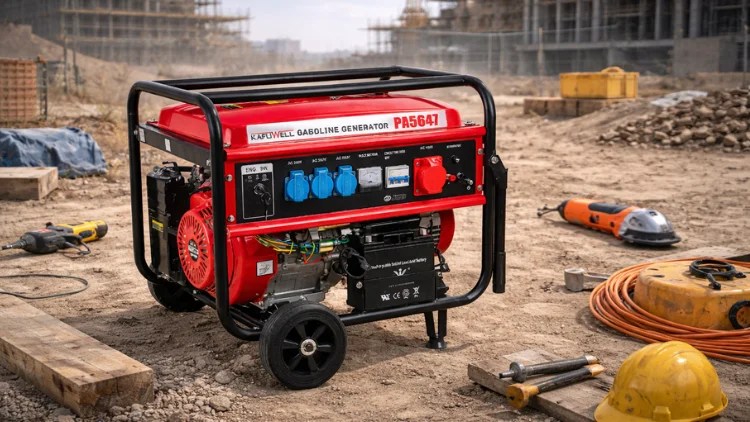
A gasoline generator is a device that produces electricity by using a gasoline engine to drive a generator unit. You can power tools through built-in outlets, sometimes together with site distribution equipment.
Key Components
Engine: Burns gasoline to create rotational force. This is the primary power source of the generator.
Alternator: Converts mechanical energy into electrical power.
Fuel Tank and Fuel System: Stores and delivers gasoline to the engine.
Outlets and Circuit Breakers: Connect tools and protect against overload.
Frame, Wheels, and Handles: Improve durability and allow easy movement on job sites.
Voltage Regulator (AVR): Stabilizes voltage output to ensure consistent tool performance.
In most construction and industrial environments, gasoline generators use an open-frame design. This structure uses a durable steel frame to protect the engine and alternator while allowing efficient cooling and easy transport. Open-frame generators are better suited for dusty, rugged environments and frequent movement, making them the most common type on construction sites.
How Gasoline Generators Work
Gasoline generators produce electricity by converting fuel into mechanical energy and then transforming that mechanical energy into electrical power.
First, gasoline flows from the fuel tank into the carburetor or fuel injection system, where it mixes with air and enters the combustion chamber. A spark plug ignites the mixture, creating combustion that drives the piston and turns the crankshaft. This process generates mechanical rotational energy.
Next, the spinning crankshaft rotates a rotor inside the alternator. As the rotor moves within the stator, it creates a changing magnetic field that induces electrical current. This is how mechanical energy is converted into electricity.
The generated electricity then passes through a voltage regulator, which stabilizes the output to prevent fluctuations, spikes, or brownouts. Most gasoline generators provide standard voltage outputs such as 110V, 220V, or 240V, depending on the model and region.
Finally, the regulated electrical current flows to the generator’s outlets, where it can power tools, equipment, or backup systems.
Main Uses of Gasoline Generators
1. Construction Sites (Framing, Roofing, Concrete, Renovation)
On construction sites, gasoline generators are often used as the primary or temporary power source, especially before grid power is available. Common powered equipment includes:
- Miter saws, circular saws, and table saws
- Rotary hammers and hammer drills
- Angle grinders and cutting tools
- Job site lighting
- Industrial vacuums
- Battery chargers
2. Temporary Power for Workshops and Factories
In workshops and factory environments, gasoline generators are typically used for temporary power during:
- Equipment maintenance
- Production line adjustments
- Temporary workstations
They commonly power handheld tools, grinders, cutting equipment, industrial fans, and work lighting. Maintenance tasks may also require drills, impact tools, and testing equipment.
Unlike short construction tasks, generators in factories may run for extended periods and operate in dusty, hot, or metal-particle environments. Running near rated load for long durations can increase engine wear and affect stability. Choosing a generator with sufficient power reserve and maintaining air filters and cooling systems helps ensure reliable long-term operation.
3. Mobile Service Vehicles and Field Repairs
For mobile repair teams and service vehicles, gasoline generators provide independent power, allowing technicians to work anywhere without relying on grid access. Common applications include:
- HVAC repair
- Industrial equipment maintenance
- Agricultural machinery repair
Generators allow drills, grinders, and cutting tools to operate anywhere. They also power battery chargers, lighting, and diagnostic equipment, enabling efficient work in low-light or remote environments. Some tasks may require small air compressors or cleaning equipment, which increases the need for stable generator output.
4. Remote Projects and Outdoor Industrial Work
In remote construction areas and outdoor industrial projects, gasoline generators are often the most practical and reliable power source, especially when grid access is unavailable or temporary wiring is impractical. Common examples include:
- Pipeline construction
- Fence installation
- Infrastructure projects
Outdoor environments often expose generators to dust, sand, and debris that can affect cooling and engine performance. Choosing a durable generator with adequate power capacity, maintaining airflow, and regularly cleaning air filters helps ensure reliable operation.
5. Temporary Installations (Stages, Tents, and Structures)
Gasoline generators are widely used in stage construction, temporary tent installations, exhibition setups, and structural assembly, especially in open areas without permanent electricity.
These projects often involve frequent equipment changes and multiple tools operating simultaneously. If generator capacity is insufficient, overload protection may trigger or tools may fail to start.
Selecting a generator with sufficient capacity and multiple industrial-grade outlets improves reliability and reduces interruptions. Proper extension cord and distribution planning also improves safety and efficiency.
Advantages and Limitations of Gasoline Generators
The main advantage of gasoline generators is their ability to provide reliable temporary power where grid electricity is unavailable. This allows construction teams to begin work immediately without waiting for permanent electrical connections.
With sufficient fuel, generators can continuously power circular saws, rotary hammers, grinders, compressors, and lighting equipment. They are available in a wide range of power levels, suitable for both individual and team operations.
However, there are practical considerations. Open-frame generators produce noticeable noise at high load, so they are usually placed at a distance from the work area. Because engines produce exhaust gases, generators must be used outdoors in well-ventilated areas and never indoors.
Generators also require regular refueling and basic maintenance, including oil checks and air filter cleaning. Operating continuously at full load may affect tool performance and generator lifespan.
Overall, gasoline generators remain one of the most reliable and widely used portable power solutions for construction and industrial environments.
How to Choose the Right Gasoline Generator
Step 1: List the Tools Used Simultaneously
Examples:
Scenario 1: Miter saw + angle grinder + lighting
Scenario 2: Air compressor + circular saw
Scenario 3: Rotary hammer + multiple battery chargers
Generator selection must be based on tools running at the same time.
Step 2: Understand Running Watts vs Starting Watts
Running watts refer to the continuous power required during normal operation. For example, a circular saw consumes steady power while cutting.
Starting watts refer to the additional power needed during startup. Electric motors require higher initial power to overcome inertia, also called surge power.
High starting-power tools include air compressors, concrete equipment, pumps, and large saws. If the generator cannot supply enough starting power, tools may fail to start or circuit breakers may trip.
Step 3: Simple Selection Method
Selection steps:
- Calculate the total running watts of all simultaneous tools
- Add a safety margin
- Ensure the generator can handle the highest starting watt requirement
Keeping normal load at 60% to 80% of rated capacity improves stability and lifespan.
Step 4: Example Power Tool Selection Scenario
Example: Cutting and grinding work
- Miter saw: 1800 W
- Angle grinder: 1200 W
- Lighting and chargers: 400 W
Total running load: 3400 W
Recommended generator size: approximately 5 kW, providing sufficient power reserve.

FAQs
Can You Run a Gasoline Generator in the Rain?
Gasoline generators should not be exposed directly to rain, as water may enter outlets or electrical components, increasing shock and damage risk. Use a generator cover or open protective structure while maintaining ventilation.
How Long Can You Leave Gasoline in a Generator?
Gasoline can typically remain usable in the generator tank for about 1 to 3 months. Over time, gasoline oxidizes and may cause starting problems or unstable performance. Fuel stabilizers or draining the tank is recommended for long storage periods.
How Much Gasoline Does a Generator Use Per Hour?
Fuel consumption depends on generator size and load:
- 2000 W generator: about 0.5 to 1.0 liters per hour
- 3000 to 5000 W generator: about 1.0 to 2.0 liters per hour
- 7000 to 10000 W generator: about 2.0 to 4.0 liters per hour
Higher loads increase fuel consumption.
What Can a 5000W Generator Run?
A 5000-watt generator can power many job site tools, including circular saws, rotary hammers, grinders, industrial vacuums, and lighting. It can run multiple medium-power tools simultaneously, depending on starting watt requirements.
Where to Store Gasoline for a Generator?
Store gasoline in certified fuel containers in a cool, dry, well-ventilated area away from heat sources and direct sunlight.
How Do You Safely Drain Gasoline From a Generator?
Turn off the generator and allow it to cool completely. Close the fuel valve, drain fuel into an approved container, and store or dispose of it according to local regulations.
Conclusion
The main purpose of a gasoline generator is to provide reliable temporary power when there is no fixed power source, supporting construction sites, workshops, and on-site repair work so power tools can run steadily in virtually any location.
If you are choosing a generator or related power tools for construction or industrial use, evaluate your wattage requirements and operating conditions based on your actual job scenario. Visit kafuwell.com to learn more about professional-grade power tools and jobsite equipment solutions that help you achieve safe, efficient, and stable power supply and on-site operations across a wide range of working environments.