Woodworking clamps are tools used to hold pieces of wood firmly together during cutting, gluing, drilling, or assembly. Common types include bar clamps, C-clamps, pipe clamps, F-clamps, spring clamps, corner clamps, and parallel clamps. Each type is designed for specific woodworking tasks, such as panel glue-ups, frame assembly, or quick temporary holding.
In this article, we will introduce the most common types of clamps used in woodworking, how they work, and when they should be used.
What Is a Woodworking Clamp?
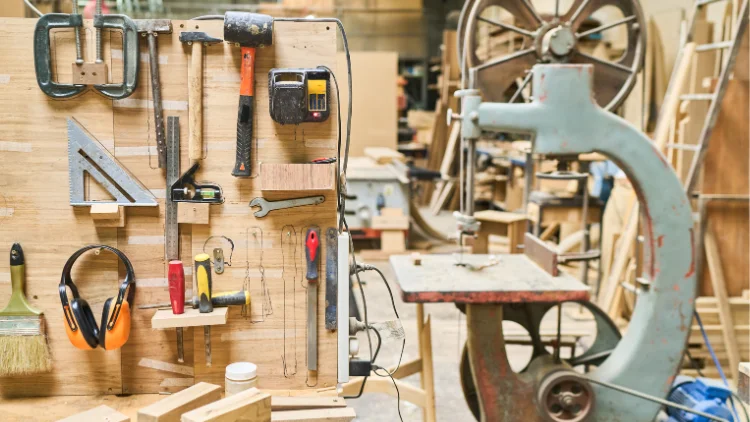
A woodworking clamp is a mechanical device designed to hold two or more pieces of material together with pressure. Clamps are commonly used during gluing, drilling, cutting, or assembly processes to prevent movement and maintain precise positioning.
Most clamps consist of two main parts:
- A fixed jaw that stays in position
- An adjustable jaw that applies pressure to secure the workpiece
By tightening a screw mechanism, trigger, or lever, the clamp applies controlled pressure that holds materials firmly without damaging them.
Clamps are widely used in furniture making, cabinet construction, carpentry, and other woodworking applications where stability and precision are critical.
Why Clamps Are Essential in Woodworking Projects
Clamps play a crucial role in ensuring accuracy and quality in woodworking projects. Without proper clamping, wood pieces may shift during cutting or gluing, which can lead to misalignment and weak joints.
Here are several reasons why clamps are indispensable in woodworking:
Improved Precision
Clamps keep materials in a fixed position, allowing for accurate cutting, drilling, or sanding.
Stronger Glue Joints
When wood pieces are glued together, clamps apply consistent pressure to ensure proper bonding.
Safer Working Conditions
Holding materials securely reduces the risk of slipping tools or unstable workpieces.
Better Project Consistency
Using the right clamps helps maintain alignment and ensures professional-quality results.
Because woodworking projects vary in size and complexity, different clamp types are used to handle specific tasks.
Common Types of Woodworking Clamps
There are many types of clamps used in woodworking, each designed for different applications. Below are some of the most widely used clamps in professional workshops and woodworking projects.
Bar Clamps
Bar clamps are one of the most common clamps used in woodworking. They consist of a long metal bar with a fixed jaw on one end and an adjustable sliding jaw on the other.
These clamps provide strong clamping pressure and are especially useful for holding large pieces of wood together during assembly.
Typical uses include:
- Gluing large wooden panels
- Furniture assembly
- Cabinet construction
- Holding boards during cutting or drilling
Bar clamps are available in different lengths, making them suitable for both medium and large woodworking projects. Their long reach allows them to secure wide materials that smaller clamps cannot handle.
C-Clamps
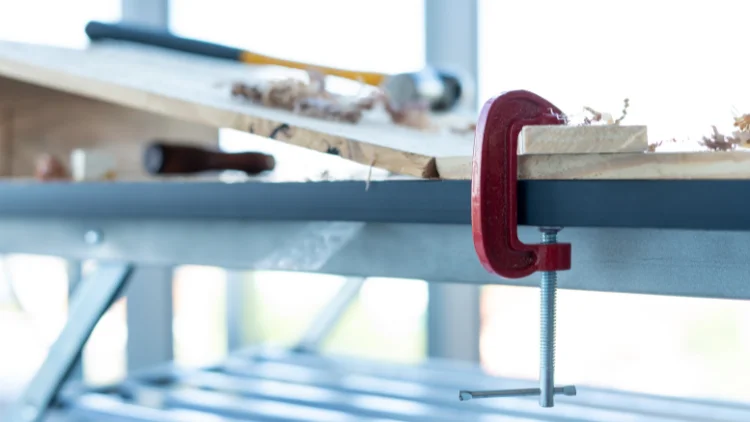
C-clamps are named after their shape, which resembles the letter “C” (they are also known as G-clamps in the UK and Europe). They have a compact structure and provide strong clamping force, making them ideal for heavy-duty clamping tasks.
A threaded screw mechanism tightens the clamp and applies pressure to the material.
Common applications include:
- Securing workpieces to a workbench
- Holding wood during drilling or sawing
- Metalworking and woodworking tasks
C-clamps are typically smaller than bar clamps but offer excellent durability and clamping force. Because of their size and strength, they are widely used in workshops and construction environments.
Pipe Clamps
Pipe clamps are adjustable clamps that use a threaded pipe as the main bar. The pipe determines the length of the clamp, allowing users to customize the clamping capacity.
This design makes pipe clamps particularly useful for large woodworking projects.
Typical uses include:
- Large tabletop glue-ups
- Door panel assembly
- Cabinet and frame construction
One of the biggest advantages of pipe clamps is flexibility. By simply replacing the pipe with a longer one, woodworkers can clamp very large materials without purchasing multiple clamps.
F-Clamps
F-clamps are named for their shape, which resembles the letter “F”. They are similar to bar clamps but are generally lighter and more compact.
These clamps have a long bar with a sliding jaw that can be quickly adjusted before tightening.
F-clamps are commonly used for:
- Light woodworking tasks
- Holding pieces during sanding
- Small furniture assembly
- Temporary positioning of materials
Because they are lightweight and easy to use, F-clamps are extremely popular among both professional woodworkers and DIY enthusiasts.
Spring Clamps
Spring clamps are small, lightweight clamps that use a spring mechanism to apply pressure. They operate similarly to clothespins and can be opened by squeezing the handles.
These clamps are very quick to use and are ideal for holding small pieces of material temporarily.
Common uses include:
- Holding small pieces during gluing
- Securing templates or guides
- Temporary positioning of wood parts
- Light-duty clamping tasks
Because spring clamps provide limited pressure, they are usually not suitable for heavy-duty woodworking projects. However, their speed and convenience make them extremely useful for quick workshop tasks.
Corner Clamps
Corner clamps are designed specifically to hold materials at a 90-degree angle. They are commonly used in woodworking projects that involve assembling frames, boxes, or cabinets.
These clamps help maintain perfect alignment when joining two pieces of wood together.
Typical applications include:
- Picture frame assembly
- Cabinet construction
- Box and drawer building
- Furniture frame alignment
Corner clamps are particularly helpful when applying glue to joints. By keeping the pieces square and stable, they help ensure strong and precise connections.
Parallel Clamps
Parallel clamps are considered one of the most advanced clamps used in woodworking. Unlike traditional clamps, their jaws remain parallel when pressure is applied.
This design distributes pressure evenly across the workpiece and helps prevent materials from shifting.
Parallel clamps are commonly used for:
- Large panel glue-ups
- Cabinet assembly
- Furniture construction
- Precision woodworking projects
Because they provide excellent stability and even pressure distribution, parallel clamps are widely used by professional woodworkers and furniture makers.
Although they are typically more expensive than standard clamps, their performance makes them a valuable investment for serious woodworking work.
Read more:10 Essential Power Tools for Woodworking Projects
How to Choose the Right Clamp for Different Woodworking Tasks
Choosing the right clamp depends on the type of woodworking project and the materials being used. Different clamps offer varying levels of clamping force, reach, and flexibility.
Here are some basic recommendations for selecting the right clamp for different woodworking tasks:
Large Panel Glue-Ups (such as tabletops or door panels)
Bar clamps are often the first choice for large glue-ups, typically with spans ranging from 24–60 inches and clamping forces of 600–1000 lbs. Pipe clamps are another popular option because they can be paired with 1–8 foot steel pipes, offering excellent expandability.
For example, when gluing an oak tabletop, bar clamps can apply even pressure across multiple boards to prevent warping. Pipe clamps are especially useful for on-site assembly due to their flexible setup. In practical tests, pipe clamps reduced glue squeeze-out failure rates by about 20% compared to F-clamps during a 24-hour curing period.
Heavy-Duty Securing (such as cutting hardwood on a workbench)
C-clamps (4–12 inch capacity, over 2000 lbs of clamping force) are typically the preferred option for heavy-duty clamping tasks. Their cast-iron frames provide strong resistance to twisting, and the screw mechanism allows precise pressure adjustment to hold 2-inch thick hardwood firmly in place.
Compared with F-clamps, C-clamps show less than 0.5 mm of displacement during high-speed cutting, making them especially suitable for table saw guides or angle grinder work.
Quick Temporary Positioning (such as holding small pieces during initial glue setup)
Spring clamps (1–6 inches, 50–150 lbs pressure) and F-clamps (12–36 inches with lightweight aluminum bars) are the most practical choices.
Spring clamps can be opened and closed in about one second, making them ideal for temporarily holding small parts or positioning nails. F-clamps, with their sliding jaw and ratchet locking mechanism, are commonly used for test-fitting T-joints and can secure multiple trim pieces within 30 seconds—three times faster than manually tightening traditional clamps.
Building Square Frames (such as drawers or picture frames)
Specialized corner clamps with 90-degree positioning grooves and built-in level indicators help ensure alignment errors remain below 1 degree.
For example, when assembling a 1×2 inch frame, a corner clamp can apply pressure to both inner and outer surfaces simultaneously, preventing frame distortion. Compared with using two F-clamps, corner clamps can provide twice the alignment accuracy.
Many professional woodworkers maintain a “clamp collection” in their workshops, typically including 10 F-clamps, 6 bar clamps, 4 C-clamps, several spring clamps, and 2–3 corner clamps, which can cover about 90% of common woodworking scenarios.
Key Factors Professionals Consider When Choosing Clamps
When selecting woodworking clamps, professionals usually evaluate several important factors.
Clamping Force
Instead of relying only on advertised pound ratings, professionals often measure actual screw torque. High-quality bar clamps can reach around 800 in-lbs of tightening torque, ensuring even pressure across glued surfaces.
Lower-quality clamps may exaggerate their clamping strength, which can result in uneven pressure distribution. For example, hardwood like oak typically requires at least 400 lbs per square foot of pressure during glue-ups.
A common testing method is to clamp aluminum blocks and verify torque with a torque wrench.
Durability
Professional woodworkers prefer clamps made with hardened steel bars and ball-joint screw mechanisms, similar to those used by premium brands such as Bessey or Jorgensen. These designs can withstand over 100,000 clamping cycles without fatigue.
Thin-wall aluminum F-clamps should generally be avoided for heavy-duty work, as they can bend under high pressure. For C-clamps, choosing deep-throat models (with throat depth greater than 1.5× the opening) can reduce the risk of leverage-related frame failure.
Jaw Protection
High-quality clamps often include soft plastic caps or replaceable rubber pads (Shore A hardness 50–60) to protect delicate wood surfaces.
When clamping walnut or other premium hardwoods, these pads help keep surface indentations below 0.1 mm. Parallel clamps naturally protect wood with their flat jaws, but adding felt pads can further reduce the risk of surface damage.
Adjustable Range
The clamp’s capacity should ideally be at least 1.2 times larger than the maximum size of the project. For example, building a 48-inch cabinet door typically requires a 60-inch clamp.
Quick-release bars or one-touch release mechanisms can reduce adjustment time by about 50%, with ratcheting F-clamps being especially efficient.
Ease of Use
Large ergonomic handles (over 1.5 inches wide) and rolling ball handles significantly reduce tightening fatigue. Tests show that after 45 minutes of continuous glue-up work, wrist strength decreases by only 15% with ergonomic handles, compared with about 30% using standard handles.
Conclusion
Understanding the different types of woodworking clamps helps professionals choose the right tool for each task, improving both efficiency and project quality.For distributors and tool retailers looking to expand their product offerings, partnering with a reliable manufacturer is equally important. KAFUWELL offers a wide range of professional-grade clamps designed for workshops, construction sites, and industrial applications.