When sourcing power tools for a distribution business, IP ratings are one of the most frequently misunderstood specifications on a product datasheet. Buyers tend to focus on voltage, torque or brand name. But the IP rating determines whether a tool can handle the real working environments your customers operate in, and directly affects whether product returns and warranty claims follow.
This guide explains what each IP code means, which protection levels to specify for different applications, and more.

Why Do IP Ratings Matter More to Distributors Than to End Users?
End users care whether a tool gets the job done. Distributors carry an additional layer of responsibility: if a tool fails because its protection level was mismatched to the working environment, the return lands on your desk, not the manufacturer’s.
A construction crew using an IP20-rated drill in a dusty concrete environment will see motor failures within months. A landscaping company using IPX4-rated trimmers in a market where daily rain is the norm will generate constant warranty claims. In both cases, the tool was not defective. The protection specification was simply wrong for the application.
The financial exposure is real. Product returns, replacement shipments, and damaged customer relationships all trace back to a single digit on a spec sheet that many distributors overlook during the sourcing process.
IP rating decisions also vary by market. A tool suited for indoor DIY retail in Germany requires a different protection level than the same tool category sold to construction contractors in Saudi Arabia or landscaping companies in Southeast Asia. Distributors who build their sourcing criteria around IP ratings from the start avoid the cost of correcting those decisions after the fact.
learn more:Survival Guide for Tools in Tropical Climates: Combating Rust, Overheating, and Power Challenges
t Is an IP Rating and How Does the Coding System Work?
IP stands for Ingress Protection. The standard is defined by the International Electrotechnical Commission under IEC 60529. It provides a universal coding system for measuring how well an enclosure resists the entry of solid particles and water.
Each IP code consists of two digits. The first digit measures protection against solid particles. The second measures protection against water. A higher number indicates stronger protection.
First digit: solid particle protection
| Digit | Protection Level |
| 0 | No protection |
| 1 | Protected against solid objects larger than 50mm |
| 2 | Protected against solid objects larger than 12.5mm |
| 3 | Protected against solid objects larger than 2.5mm |
| 4 | Protected against solid objects larger than 1mm |
| 5 | Dust-protected: limited ingress permitted, no harmful deposit |
| 6 | Dust-tight: complete protection against contact and dust |
Second digit: water protection
| Digit | Protection Level |
| 0 | No protection |
| 1 | Protected against vertically falling water drops |
| 2 | Protected against water drops up to 15 degrees from vertical |
| 3 | Protected against spraying water up to 60 degrees from vertical |
| 4 | Protected against splashing water from any direction |
| 5 | Protected against low-pressure water jets from any direction |
| 6 | Protected against powerful water jets from any direction |
| 7 | Protected against temporary immersion up to 1 meter for 30 minutes |
| 8 | Protected against continuous immersion beyond 1 meter |
| 9 | Protected against high-pressure, high-temperature water jets |
An IP54 rating, for example, means partial dust protection and resistance to water spray from any direction. An IP67 rating means the enclosure is completely dust-tight and can be submerged temporarily in water.
What Does the “X” in IPX4 or IPX6 Mean?
The letter X in an IP code does not indicate zero protection. It means that specific protection category was not tested or is not specified by the manufacturer.
IPX4 means the tool has been tested for water resistance at level 4, splash protection from any direction, but no dust protection test was conducted or declared. The tool may have some degree of dust resistance in practice, but it cannot be assumed or communicated to customers.
Manufacturers use X codes for two common reasons. First, the application does not require dual testing. A garden hose attachment designed to handle water contact does not need dust certification. Second, testing costs money. Some manufacturers choose to certify only the dimension most relevant to their target market.
For distributors, the practical implication is straightforward. Do not treat IPX as equivalent to IP0X. Treat it as information absent. If your customers operate in dusty environments, require a confirmed first digit before sourcing. If dust is not a factor, IPX may be acceptable.
Which IP Rating Should You Specify for Different Power Tool Applications?
The correct IP rating depends on where the tool will be used, not on the tool category alone. A cordless drill sold into indoor retail needs a different specification than the same drill sold to construction site contractors.
| Application | Recommended IP Rating | Reason |
| Indoor workshop, dry environment | IP20 | No moisture risk, basic solid particle protection sufficient |
| General DIY, light outdoor use | IP44 | Dust and splash protection for most consumer scenarios |
| Semi-outdoor construction work | IP54 | Partial dust protection, resistance to light water spray |
| Outdoor construction, wet conditions | IP55 | Full dust protection, resistance to water jets |
| Garden tools, irrigation environments | IPX5 / IPX6 | Direct exposure to water from hoses |
| Extreme industrial, concrete cutting | IP67 | Complete dust seal, temporary submersion tolerance |
| Automotive workshops, oil and dust combined | IP54 and above | Dual risk from particulates and fluid exposure |
When building a distribution catalogue for multiple markets, use this table as a baseline. Adjust upward based on local climate, industry type and the regulatory expectations of the destination market.
Do Different Export Markets Have Different IP Rating Expectations?
Yes, and the differences are significant enough to affect which products you stock for each region.
In the European Union, CE certification requirements for certain tool categories reference IP rating thresholds. Outdoor garden power tools sold into EU retail are broadly expected to meet IPX4 as a minimum. Tools that fall short of this standard may be challenged at the retail compliance level even if they technically meet CE requirements in other respects.
In the Middle East, extreme temperatures and persistent fine sand create conditions that demand IP54 or higher as a practical baseline for construction tools. Distributors supplying Gulf construction projects who stock IP44 tools regularly encounter early failure complaints that erode margins through warranty replacements.
In Southeast Asia and other tropical markets, high humidity and frequent rainfall make water resistance the priority specification. Tools with strong water ratings but lower dust ratings can perform adequately in many of these environments. For tools used in agriculture and landscaping, IPX5 or IPX6 is a practical minimum.
In Australia, tools sold under the SAA certification framework carry similar expectations to the EU for outdoor categories. Distributors entering this market should verify IP requirements category by category rather than applying a single standard across the range.
Understanding these regional expectations before finalising a sourcing order prevents the common scenario where a product suitable for one market generates returns in another.
How Should Distributors Specify IP Ratings When Sourcing from a Manufacturer?
Vague requirements produce inconsistent results. The following steps give you a repeatable process for building IP specifications into your sourcing workflow.
Step 1. Define the end-use environment for each product category before approaching suppliers. Identify whether the tool will be used indoors, semi-outdoors, or in full outdoor or industrial conditions. This determines the target IP code before any supplier conversation begins.
Step 2. Write the required IP rating into your product specification sheet as a concrete code, not a descriptive phrase. “IP54” is a specification. “Dustproof and splash-resistant” is not. Suppliers respond to codes with test data. They respond to descriptions with interpretation.
Step 3. Request the third-party test report alongside the product quotation. The report should reference IEC 60529 and be issued by a recognised testing body. Acceptable bodies for most markets include SGS, TUV Rheinland, Bureau Veritas and Intertek. Internal factory test reports do not carry equivalent weight for retail or regulatory purposes.
Step 4. Confirm that the IP code is printed on the product itself and on the packaging. This is a requirement for many retail channels and for compliance in regulated markets. A product with a certified rating that carries no visible marking fails at the point of sale.

Frequently Asked Questions
What Is the Minimum Ip Rating for Outdoor Power Tools?
For general outdoor use, IP44 is the minimum recommended rating. It provides protection against solid particles larger than 1mm and splashing water from any direction. For construction sites, wet conditions or professional landscaping applications, IP55 or higher is more appropriate.
What Does Ipx4 Mean on a Power Tool?
IPX4 means the tool has been tested and rated for protection against water splashing from any direction. The X indicates that dust protection was not tested or specified. It does not mean zero dust protection, but distributors should not assume any dust resistance without a confirmed first digit.
Is Ip67 Necessary for Most Power Tools?
IP67, which indicates complete dust protection and resistance to temporary submersion up to one meter, is not required for most professional power tools. It is most relevant for tools used in flooding-prone environments or extreme industrial settings. For standard construction and workshop use, IP54 or IP55 provides sufficient protection at a lower procurement cost.
How Do I Verify That a Supplier’s Ip Rating Claim Is Legitimate?
Request the full IEC 60529 test report from a recognised third-party laboratory such as SGS, TUV Rheinland or Intertek. Confirm that the model number on the report matches the product you are ordering, and have the sample independently inspected before committing to bulk production.
Conclusion
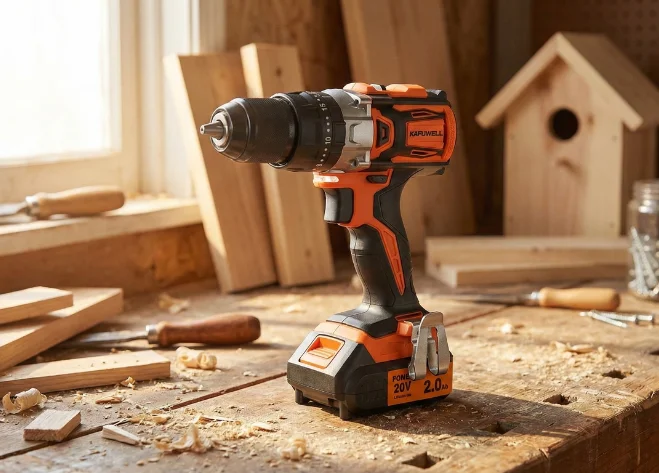
Kafuwell supplies IP-rated power tools with full certification documentation, including third-party test reports compliant with IEC 60529. Our product range covers IP44 through IP67 ratings across cordless drills, angle grinders, and outdoor power equipment, with certifications suitable for EU, Middle East, Southeast Asia and other major export markets.
If you are building or expanding a distribution portfolio, contact us to request product specifications or apply to become an authorized Kafuwell distributor.