The Philippines is one of the most active hardware markets in Southeast Asia, and demand for power tools has grown alongside its construction boom. For distributors and importers planning to source tools for this market, a few practical points are worth understanding before choosing a supplier: which categories sell, what specifications the local grid requires, which certifications are mandatory, how the tropical climate affects tool selection, and what to look for in a sourcing partner.
Why Source Power Tools for the Philippine Market?
The Philippine economy has grown steadily at around 5.5% per year, one of the highest rates in Southeast Asia, and construction is a major driver of that growth. The construction sector accounted for roughly 7.7% of GDP in the first half of 2025. Much of that comes from the government’s “Build Better More” infrastructure program, which covers more than 200 flagship projects in transport, energy, and water.
The power tool market reflects this momentum. According to Data Bridge Market Research, the Philippine power tools market was valued at around USD 215 million in 2024. It is projected to reach roughly USD 285 million by 2032, a compound annual growth rate of about 4.6%. The same firm identifies the industrial and professional segment as the largest end-user group, and sawing and cutting tools as among the fastest-growing categories. With a population over 115 million and steady building activity, demand spans professional contractors, automotive repair shops, and a large home-improvement segment.
Which Power Tool Categories Are in Demand?
Not every category performs equally in the Philippines, so understanding demand patterns helps a distributor build the right assortment. Demand is shaped by how Filipinos build. Residential and commercial construction relies heavily on reinforced concrete and concrete hollow blocks, while a large repair and renovation sector keeps everyday tools moving year-round.
Angle Grinders and Cutting Tools
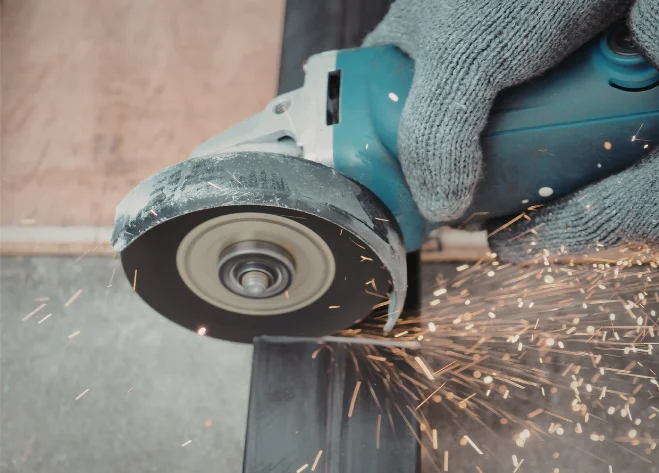
Angle grinders are the workhorse of this group. Inexpensive and versatile, they cut rebar, steel, tile, and concrete with the right disc. That keeps them in constant use on construction sites and in metal fabrication shops. Circular saws and reciprocating saws also sell steadily, the former for woodwork and concrete formwork, the latter for demolition and renovation. Data Bridge Market Research lists sawing and cutting tools among the fastest-growing categories in the market.
Drilling and Fastening Tools
Because so much Philippine construction is concrete and block, hammer drills and rotary hammers for drilling into masonry are essential rather than optional. Corded hammer drills remain popular for their lower price, while cordless impact drills and impact drivers are growing as battery platforms become more affordable. Fastening tools see steady demand from both site work and furniture assembly.
Concrete and Demolition Tools
Heavy tools such as SDS rotary hammers, demolition hammers, and concrete breakers are regularly sourced for infrastructure and renovation work, which is the country’s largest tool application. The “Build Better More” pipeline of transport and public-works projects sustains demand at the professional end of this segment.
Hand Tool Sets and Accessories
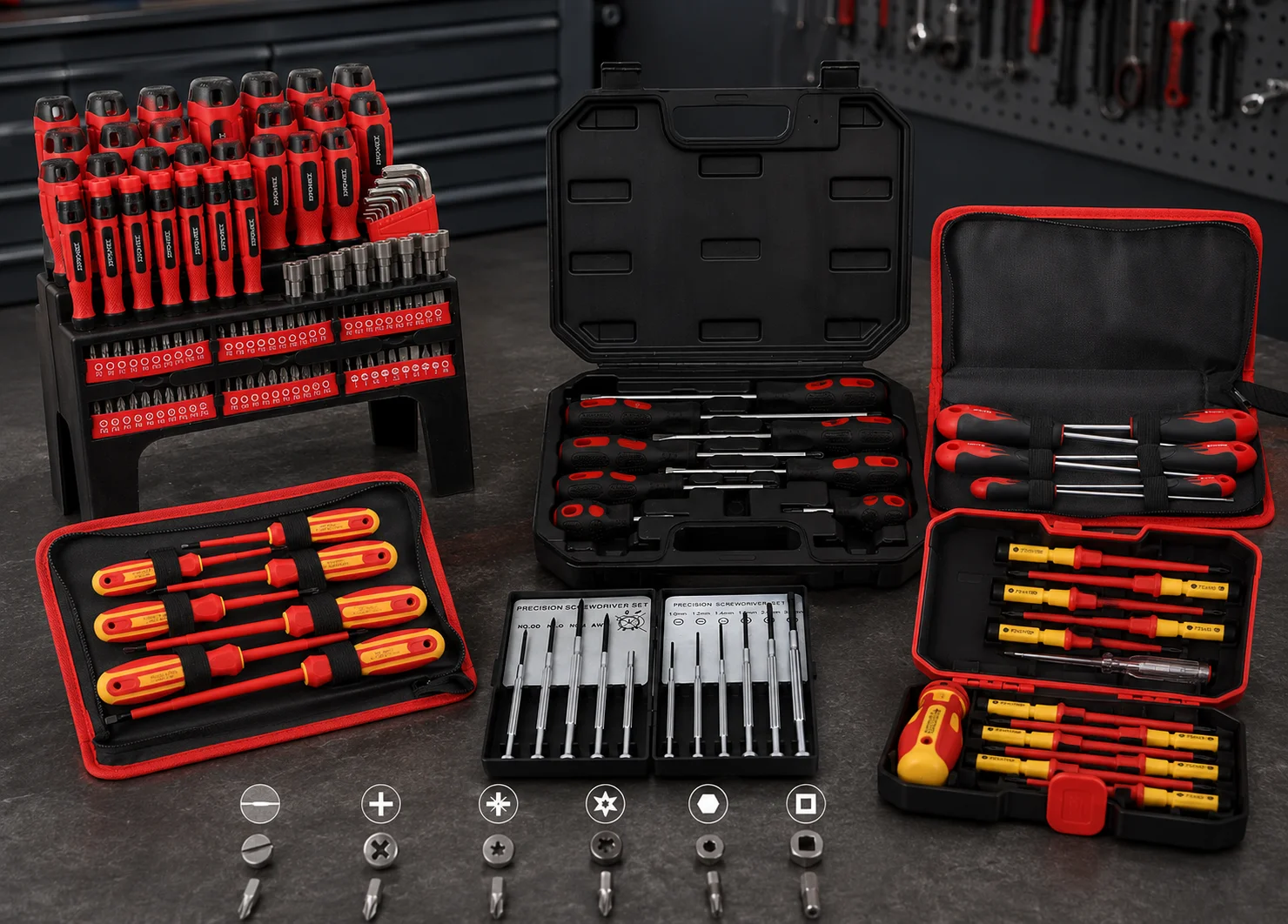
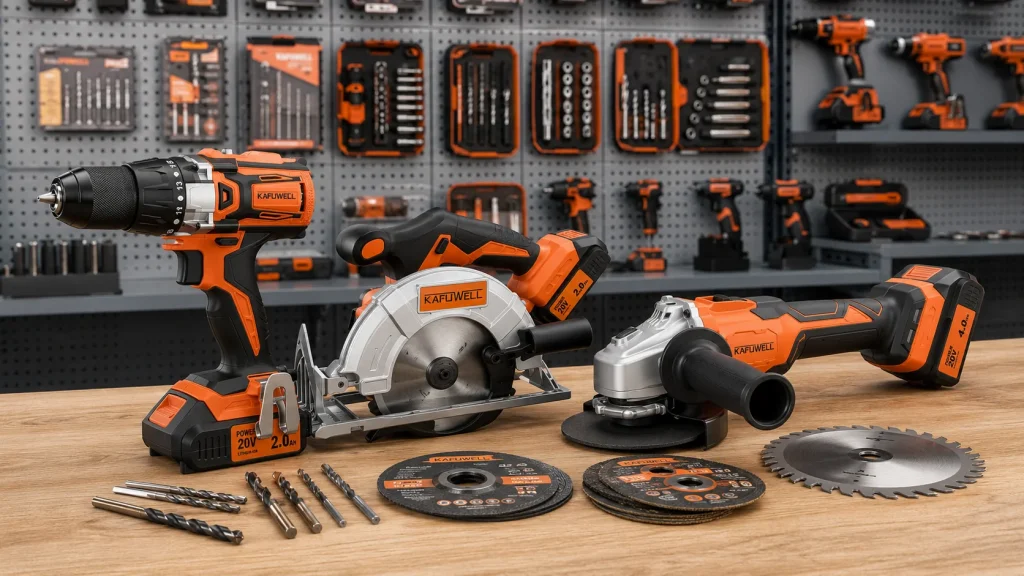
Combination kits, socket sets, and screwdriver sets move steady volume through retail chains, serving both DIY households and professionals. Just as important for a distributor are consumable accessories: grinding discs, cutting wheels, drill bits, and saw blades. These generate repeat purchases long after the original tool sale. A distributor who stocks the matching consumables for every power tool category captures recurring revenue, not just one-time sales.
Garden and Outdoor Tools
Battery-powered garden tools such as brush cutters, hedge trimmers, and chainsaws are gaining ground. The growth is driven by residential landscaping in cities and small-scale agriculture in the provinces. This segment is smaller than construction tools but is growing as cordless options become more accessible and affordable.
What Specifications Does the Philippine Market Require?
The Philippines runs on a 220V supply at 60Hz, which is an unusual combination that directly affects power tool selection.
The voltage (220V) is the same as mainland China and most of Europe. But the frequency (60Hz) matches North America rather than the 50Hz used in China and Europe. For most handheld power tools, this is not a problem. Tools with universal (brushed) motors, which include most drills, grinders, and saws, run on both 50Hz and 60Hz without issue. The difference matters more for stationary equipment with induction motors, such as bench grinders, air compressors, and some pumps. These should be rated for 60Hz to run at the correct speed. Cordless tools avoid the frequency question entirely, since the only mains-connected component is the charger, and most modern chargers accept a wide input range.
Plug types are also worth checking. The Philippines mainly uses Type A and Type B (the flat-pin American style), with some Type C round-pin outlets. Corded tools and chargers should match these plug types or be supplied with the correct plug fitted.
What Certifications and Import Requirements Apply?
Certain products sold in the Philippines must carry mandatory certification from the Bureau of Philippine Standards (BPS), which operates under the Department of Trade and Industry.
The BPS runs two schemes. It issues the Philippine Standard (PS) Mark to manufacturers whose factory and products pass an audit and testing against the relevant Philippine National Standards. The Import Commodity Clearance (ICC) is the route for importers, who must show that their imported products conform to those standards through testing before distribution. For products on the mandatory list, neither locally made nor imported goods can be sold without the PS Mark or ICC sticker. Because the mandatory list is specific and updated over time, a distributor should confirm whether their particular tools fall under it before importing, rather than assuming.
One practical point: suppliers that already hold CE, GS, or UL certification usually have test reports that overlap with Philippine National Standards, which can simplify the ICC application. On the trade side, the ASEAN-China Free Trade Area gives products manufactured in China preferential tariff treatment when entering the Philippines. To qualify, the shipment must include a valid Form E certificate of origin. Because the exact duty rate depends on the product’s HS code, it is worth verifying the current rate for each tool category rather than relying on a single figure.
What Do Tropical Conditions Demand from Tools?
The Philippines has a tropical climate, with high humidity, heavy rainfall, and temperatures frequently reaching the mid-30s Celsius. These conditions affect tool performance and longevity.
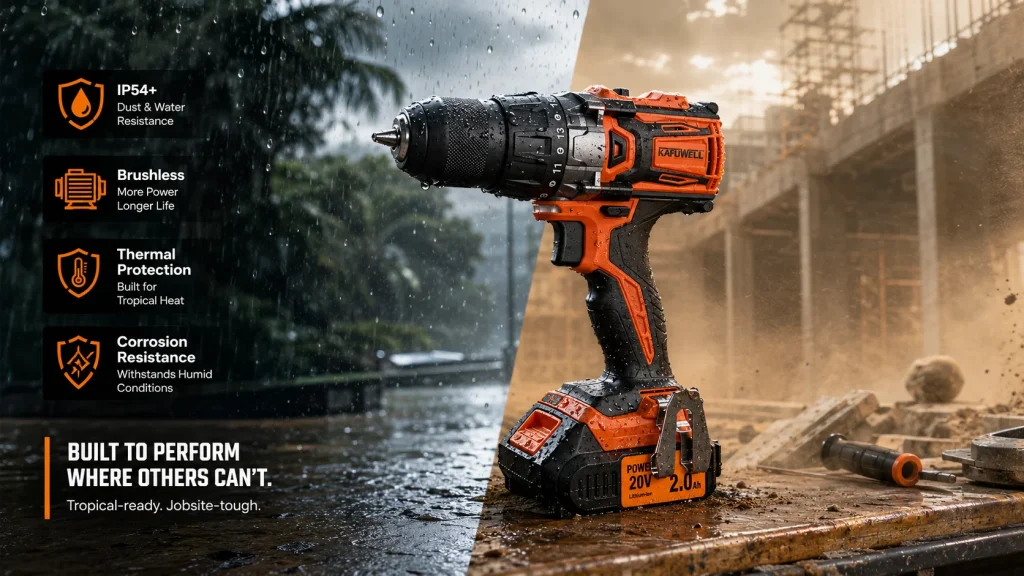
Corrosion resistance is a priority, especially for hand tools with exposed metal. Chrome vanadium or chrome-molybdenum steel with corrosion-resistant finishes holds up better in humid air. Heat management matters for power tools, since extended use in hot weather accelerates motor wear. Brushless motor tools handle heat more efficiently and tend to last longer for professional users in tropical markets. IP-rated tools are worth stocking for construction buyers. An IP54 or higher rating indicates resistance to dust and splashing water, which is relevant during the rainy season from roughly June to November. Finally, lithium-ion batteries can degrade faster in high heat, so it is worth checking a supplier’s stated operating temperature range and whether their batteries include thermal protection.
What Should You Look for in a Power Tool Supplier?
The right supplier for the Philippine market combines certification readiness, range, and flexibility.
Certification readiness comes first: a supplier that already holds CE, GS, UL, or SAA marks will be far simpler to bring through the import process. Product range depth matters because the market rewards distributors who can offer a complete line. A supplier covering power tools, hand tools, tool sets, and accessories lets you consolidate sourcing and reduce freight. It is also reasonable to ask whether a supplier has experience exporting to other tropical or Southeast Asian markets, since that often means their products have been validated for similar conditions. Low minimum order quantities give you room to test new products before committing to volume. This matters in a market with many small and mid-sized retailers outside Metro Manila. OEM and private-label capability is valuable if you plan to build your own brand. Finally, confirm lead times and logistics. Sea freight from China to the Philippines typically takes one to two weeks including clearance, and consolidated shipping helps with mixed orders.
Summary
In the Philippine market, most of what determines a tool’s success is decided at the sourcing stage, not after the container lands. Choosing a supplier whose products already suit the 60Hz grid, carry the right certifications, and hold up in tropical conditions removes the most expensive problems before they happen.
KAFUWELL manufactures power tools and hand tools for distributors worldwide and ships globally. We carry over 4,000 SKUs across power tools, hand tools, pneumatic tools, and accessories. With minimum orders starting at one carton and mixed-product orders accepted, distributors can test a range of products before scaling up. We hold ISO 9001, BSCI, and FSC certifications and support OEM and ODM customization for distributors building their own brand. Browse our product range at kafuwell.com, or visit Catalog Download for specifications and factory credentials.