Hammer drills and rotary hammers both punch holes into masonry, but they are not interchangeable. Picking the wrong one means slower progress, premature bit wear, and possibly a tool that cannot handle the material at all.
This guide walks through the key decision points—mechanism type, power class, bit system, and power source—so you can match the tool to the actual demands of your construction project.

Hammer Drill vs Rotary Hammer: The Core Distinction
The two tools look similar and share a name, but the internal mechanism that generates impact force is fundamentally different. That single distinction shapes everything from maximum drilling capacity and penetration speed to operator fatigue over a full workday on the jobsite.
Hammer Drill Mechanism
A standard hammer drill uses a cam-action system where two ribbed metal plates spin against each other to produce rapid, shallow impacts. The hammering force depends partly on how hard you lean into the tool. This design handles lighter masonry—brick, block, and mortar—but tends to struggle with poured or reinforced concrete.
Rotary Hammer Mechanism
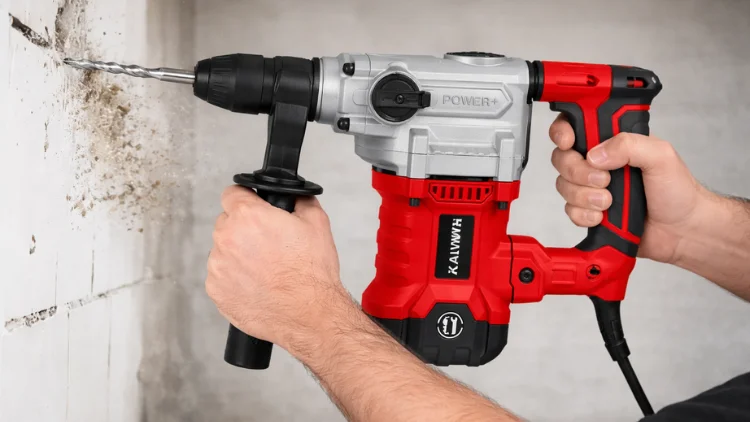
A rotary hammer relies on an electro-pneumatic piston that compresses air inside a cylinder to generate each blow. The impact energy is consistent regardless of applied pressure, delivering substantially more force per strike. Many mid-range and heavy-duty rotary hammers also offer a hammer-only chiseling mode for light demolition tasks.
Why the Difference Matters on Site
For occasional anchor holes in brick, a hammer drill handles the job fine. Once the scope involves structural concrete, repeated drilling throughout the day, or holes larger than roughly half an inch, a rotary hammer becomes the practical choice. The piston mechanism also requires less downward pressure from the operator during use.
Understanding Bit Systems
The bit system your tool accepts determines what accessories are available and how quickly you can swap between drilling and chiseling tasks. Using the wrong shank type is not just inconvenient—it limits your maximum drilling capacity and may compromise operational safety.
SDS-Plus
SDS-Plus is the standard for light to medium-duty rotary hammers. The 10 mm shank locks into the chuck without tools and allows the bit to move independently during the hammering cycle. Typical drilling capacity ranges from about 4 mm to 30 mm in diameter, covering most anchor installations and conduit work.
SDS-Max
SDS-Max uses an 18 mm shank with five locking grooves, designed for heavier rotary hammers. It handles larger bit diameters—often exceeding 50 mm—and delivers the impact energy needed for core drilling, deep anchoring in structural concrete, and demolition chiseling on slabs and foundations.
How Much Impact Energy Do You Need?
Impact energy, measured in joules, indicates how hard each blow strikes the material. Higher impact energy generally helps with denser concrete, though actual drilling speed also depends on BPM, bit geometry, and effective dust extraction from the hole.
- Light-duty tasks (anchors in brick, block, mortar) — roughly 1.0 to 2.0 joules is generally sufficient.
- Medium-duty tasks (concrete drilling up to 20 mm, conduit runs) — approximately 2.5 to 6.0 joules covers most scenarios.
- Heavy-duty tasks (large-diameter holes, core drilling, frequent chiseling) — 6.0 joules and above, where an SDS-Max platform may be warranted.
Manufacturer specifications clearly illustrate this range of differences. For example, the Kafuwell PA5355A, an SDS-Plus model, is rated at 5.5 joules of impact energy. In contrast, SDS-Max models such as the Kafuwell PA5356A deliver 10 joules of impact energy, making them suitable for sustained heavy-duty chiseling in construction applications.
Corded vs Cordless
Power source is no longer a simple trade-off between mobility and raw output. Modern high-voltage cordless platforms have narrowed the performance gap considerably, but each option still carries distinct practical advantages depending on your specific jobsite conditions and total project duration. Two variables tend to drive the decision:
- Duration of continuous drilling — long sessions favor corded tools with unlimited runtime.
- Accessibility of power outlets — remote or multi-story sites favor cordless platforms with portable battery packs.
When Corded Makes Sense
Corded rotary hammers deliver consistent, fade-free power for as long as you need them. On projects involving continuous concrete drilling—foundation work, large-scale anchor setting, or extended chiseling—a corded tool eliminates any concern about battery depletion. Corded models also tend to cost less upfront since they do not require separate battery and charger investments.
When Cordless Earns Its Place
Cordless rotary hammers running on 18V or 36V lithium-ion platforms now deliver enough impact energy for most SDS-Plus tasks. Brushless motors in current models improve efficiency and reduce heat buildup. The absence of a power cord removes a tripping hazard and speeds up repositioning between work areas.
Choosing by Project Type
Matching the tool class to your actual scope of work helps prevent overspending on unused capability and underperformance when your specific project demands more drilling power. The table below offers a quick-reference breakdown by common construction scenarios.
| Project Type | Recommended Tool | Bit System | Typical Impact Energy |
|---|---|---|---|
| Residential remodel (small anchors in brick/block) | Hammer drill | Standard round-shank | Varies by model |
| Light commercial (anchors, conduit in concrete) | Compact SDS-Plus rotary hammer | SDS-Plus | 1.5–3.0 J |
| Medium-duty concrete (rebar anchors, through-holes) | SDS-Plus rotary hammer | SDS-Plus | 2.5–4.5 J |
| Large-diameter holes, core drilling, slab demolition | SDS-Max rotary hammer | SDS-Max | 5.0+ J |
| Light chiseling, tile removal | SDS-Plus rotary hammer (hammer-only mode) | SDS-Plus | 2.0–3.0 J |
Features Worth Checking Before You Buy
Beyond the core specs, several secondary features affect daily usability and long-term operator comfort on demanding jobsites. Overlooking these details often leads to frustration that only surfaces after the first full day of sustained fieldwork with the tool.
Vibration Control
Extended use of any percussive tool carries cumulative vibration exposure risks. Anti-vibration handles and dampened housings reduce transmitted force to the operator. If your crew drills for hours at a stretch, this feature may be worth prioritizing over a marginal difference in raw impact energy.
Clutch and Overload Protection
When a bit catches rebar or binds in a hole, the tool can jerk violently. A slip clutch or mechanical torque limiter stops the tool body from spinning in the operator’s hands, reducing the risk of wrist injury. Most mid-range and professional-grade rotary hammers include some form of this protection.
Final Thought
Choosing the right hammer drill or rotary hammer ultimately comes down to balancing material type, hole size, and job intensity. Whether you’re working on light masonry or heavy-duty concrete, the right tool configuration can significantly improve efficiency while reducing long-term operating costs.
For procurement teams and distributors, selecting a supplier goes beyond product specs. Consistent quality, a complete product range, and reliable supply are critical to keeping projects on track.
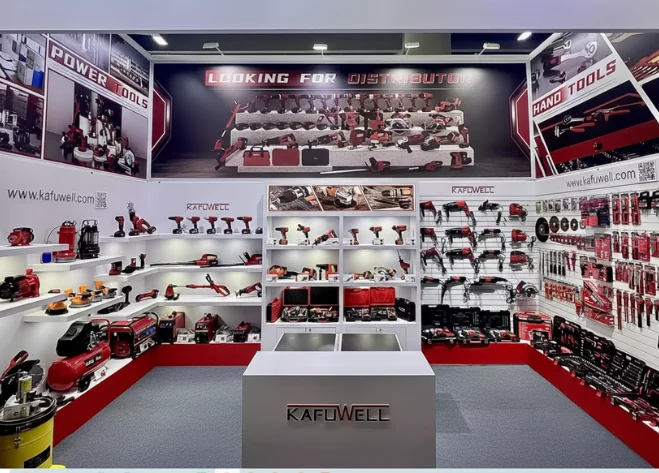
Kafuwell offers a full range of hammer drills and rotary hammers, including SDS-Plus and SDS-Max systems, designed to meet the demands of both light-duty and heavy-duty applications.
Looking for the right tool solution for your project? Contact Kafuwell for expert recommendations and competitive pricing. Download our full product catalog to explore all available options: https://www.kafuwell.com/download/