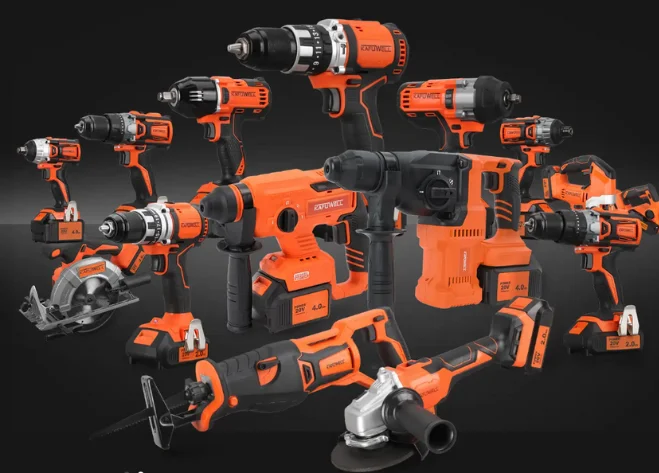
Walk into any hardware store, and you’ll see cordless tools dominating the shelves. This naturally raises a question: by 2026, are corded power tools still worth buying?
In fact, in many applications, corded tools are not only still relevant—they remain leaders in efficiency and value for money.
Whether you’re a cost-conscious DIY user or a distributor planning inventory, understanding the advantages of corded tools is essential.

The Cordless Revolution: Why Everyone Wants Batteries
There is no denying the appeal of cordless tools. The technology has made massive leaps in the last decade.
- Portability: No extension cords to untangle, no tripping hazards, and the ability to work on a roof or in a garden without power access.
- Performance: Modern high-output Li-ion batteries paired with brushless motors can now match the torque of many corded counterparts.
For quick tasks—like hanging a picture or assembling furniture—cordless is undeniably the winner. But convenience comes at a price.
5 Reasons Corded Tools Are Still King
If cordless is so great, why do professionals and smart DIYers still buy corded Impact Drills and Grinders? It comes down to physics and economics.
1. The “Price-Per-Watt” Ratio
This is the single biggest argument for corded tools. Let’s look at a concrete example using an Impact Drill:
- Corded Impact Drill (710W): A high-quality, industrial-grade corded impact drill typically costs USD 25–40 and can deliver continuous, stable performance when working on concrete.
- Cordless Impact Drill (18V): To achieve comparable performance, you need the tool body, battery, and charger, bringing the total cost to approximately USD 85–125.
The Verdict: With corded tools, you are paying for the motor, not the battery technology. You get maximum power for minimum cash.
2. Unlimited Runtime (Zero Downtime)
Batteries die. It’s a fact of life. If you are drilling hundreds of holes into masonry with an impact drill, or sanding a large deck, a battery might last 20 to 30 minutes. Then, work stops while you charge (unless you spent extra money on backup batteries). A corded tool runs all day, every day. For production environments, “infinite runtime” is a feature that no battery can beat.
3. Consistent Torque (No Voltage Sag)
Have you ever noticed your cordless drill slowing down as the battery drains? That is called Voltage Sag. As the charge drops, the power output drops. A corded impact drill plugged into a 220V/110V outlet delivers 100% power, 100% of the time. When you are drilling through tough concrete or steel, you need that consistency.
4. Longevity & Reliability (The 10-Year Test)
Lithium-ion batteries have a lifespan. Even if you treat them well, they degrade after 3-5 years (or 500-1000 charge cycles). Once the battery dies, the tool is a paperweight unless you buy a replacement (which often costs as much as a new tool). A corded impact drill has a simple, robust construction.
5. Weight & Ergonomics
This surprises many people. While cordless tools are “portable,” they are often heavier.
- A corded impact drill is mostly a plastic shell and a copper motor.
- A cordless version has the motor plus a heavy battery pack hanging off the handle. If you are drilling overhead (like installing curtain rods or ceiling lights), a lighter corded tool puts significantly less strain on your wrist.
Head-to-Head: Which Tool Type Wins?
Not all tools are created equal. Here is our recommendation based on tool category:
| Tool Category | Winner | Why? |
| Impact Drills | Draw | Cordless for quick tasks; corded for heavy masonry drilling to save weight and cost. |
| Circular Saws | Draw | Cordless for framing (mobility); corded for continuous cutting (power). |
| Angle Grinders | Corded | Grinding consumes massive energy. Batteries drain too fast to be practical for long jobs. |
| Sanders | Corded | Sanding requires long runtimes. Corded is the only logical choice. |
| Miter Saws | Corded | It sits on a bench. Why pay extra for batteries when you have an outlet right there? |
Market Insight: Why Distributors Should Stock Both
If you are a tool distributor or retailer, you might be tempted to go “all-in” on cordless. Don’t make that mistake.
The Entry-Level Trap
New homeowners are more price-sensitive. Between USD 30–50 corded tools and USD 70–100 cordless lithium tool kits, the former is still much easier to sell.
Developing Markets
In regions where power charging infrastructure is limited or cost sensitivity is high, corded tools remain the primary volume seller.
Industrial Theft
Factories often prefer corded tools because batteries are high-theft items.
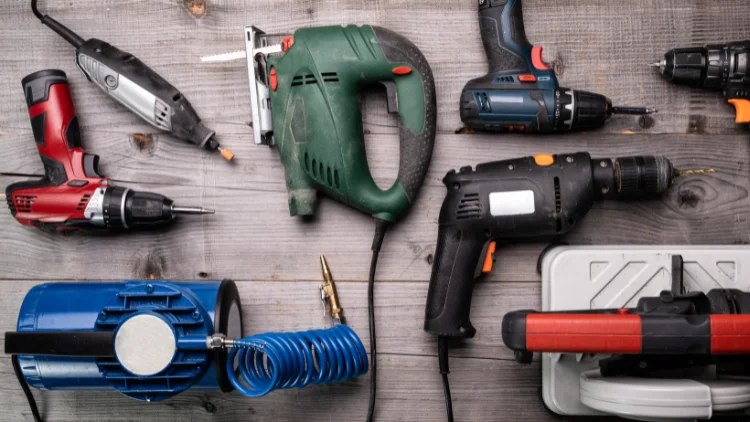
FAQ: Common Questions About Corded vs Cordless
Do Corded Drills Have More Power?
Generally, yes—dollar for dollar. A cheap corded drill usually has more sustained torque than a cheap cordless drill. To match the power of a corded tool, you typically need to buy a high-end “Professional Grade” cordless model.
How Long Do Cordless Tool Batteries Last?
A typical Li-ion battery lasts 3 to 5 years before it holds significantly less charge. A corded tool can last 20+ years with simple maintenance (like changing carbon brushes).
Are Corded Tools Safer?
It depends. Cordless tools eliminate the tripping hazard of extension cords. However, corded tools eliminate the fire risk associated with damaged or overheating lithium batteries.
Conclusion
Cordless tools focus on convenience and mobility, while corded tools excel in productivity, value for money, and long-term durability. A truly well-equipped toolbox—and a smart hardware store—needs both.
At Kafuwell, we provide high-performance solutions for every type of user:Explore our Brushless Cordless Series for ultimate mobility.
Choose our Classic Corded Power Tool Series for industrial-grade power at an unbeatable price.