In today’s power tool market, brushless tools have steadily become the mainstream choice. Industry reports show that power tools equipped with brushless motors are growing at an annual compound rate of around 7–8 percent, shifting from a niche premium option to a standard configuration for professional job sites and mid- to high-end DIY users.
If you are planning your next round of tool purchases, whether you are a contractor, a facility maintenance manager, or a channel distributor, this is a decision worth careful consideration. This article breaks down the differences between brushless and brushed power tools in detail, helping you choose the option that best fits your real usage needs.

What Is a Brushless Power Tool?
A brushless power tool uses a brushless DC motor. Instead of relying on mechanical contact for commutation, it uses an electronic control board and Hall sensors to manage current flow in the stator windings, while the rotor is driven by permanent magnets. In simple terms, the commutation process that once depended on friction and electrical arcing is now handled by electronics.
This design delivers two immediate benefits.
First, friction is significantly reduced. Motor efficiency can easily reach 85–90 percent, meaning more battery energy is converted into usable torque rather than wasted as heat.
Second, there are virtually no mechanical wear components. Theoretical motor lifespan can extend from a few thousand hours in brushed motors to well over ten thousand hours, making brushless tools better suited for high-frequency and long-duration professional use.
For this reason, flagship models in many 18V and 20V cordless platforms, including drills, impact drivers, and angle grinders, almost always adopt brushless motors. These tools often serve as a brand’s primary professional lineup.
What Is a Brushed Power Tool?
Compared to brushless designs, brushed power tools rely on a more traditional and mechanically simpler brushed DC motor. The rotor contains windings, and carbon brushes physically contact the commutator to switch current direction and create a rotating magnetic field. The stator may use permanent magnets or field windings.
The main advantages of this structure are simplicity and low manufacturing cost. Control requirements are minimal, which is why brushed motors have long dominated entry-level drills, saws, and grinders.
However, the drawbacks are equally clear. Continuous friction between the brushes and commutator generates heat, sparks, and noise. This leads to energy loss and gradual component wear. Common failure points include worn brushes, burned commutator segments, and localized rotor shorts.
In light DIY use, these issues may take years to become noticeable. Under daily drilling, cutting, and grinding workloads, however, brushed tools tend to overheat, lose speed, and show reduced lifespan much sooner. This is one of the key reasons many professional users now switch directly to brushless platforms when upgrading.
Why Are Brushless Tools Usually Better?
Power and Efficiency
When people talk about power, they often focus only on voltage and rated wattage, while overlooking efficiency. With the same input power, a more efficient motor delivers more usable output. This is the core reason brushless tools often feel more powerful on the same 18V or 20V battery platform.
Industry data indicates that brushless motors typically reach 85–90 percent efficiency, while brushed motors usually operate around 75–80 percent. Some low-cost brushed designs can fall as low as 50–70 percent. That 10–15 percent efficiency gap translates directly into faster drilling, less stalling, and more consistent performance under load.
Runtime and Battery Utilization
In cordless tools, the battery is the fuel tank. Runtime directly affects workflow and charging cycles. Because of higher efficiency, brushless tools deliver noticeably longer runtime on the same battery capacity.
Engineering and motor performance data suggest that a 10–15 percent efficiency improvement can result in roughly 25–50 percent longer runtime in real-world tools, especially under medium to high loads. In practical terms, a 4.0Ah battery that barely finishes one wall of anchor holes with a brushed tool may still have usable capacity left with a brushless one.
Additionally, brushless motors use electronic controllers to adjust current based on load. Unlike brushed motors that draw high current continuously, brushless tools avoid wasting energy during light-duty tasks such as driving screws into softwood. This further improves battery efficiency.
For users already invested in a unified 18V or 20V platform, these gains accumulate over a full project cycle. Fewer battery swaps, fewer spare packs on site, and reduced battery wear all add up to meaningful productivity benefits.
Heat and Thermal Management
Heat is a hidden enemy of both performance and longevity, and this is where the gap between brushed and brushless tools becomes especially clear.
In brushed motors, constant brush-to-commutator contact creates localized heat and electrical arcing on the rotor. This heat is difficult to dissipate and often causes internal temperatures to rise far above what the housing suggests. Over time, insulation degradation and winding damage lead to power loss or motor failure.
Brushless motors concentrate heat primarily in the stator windings and control electronics, which are structurally easier to cool through the housing. Combined with higher efficiency and lower losses, overall temperature rise under sustained load is significantly lower.
Technical comparisons show that under continuous high-load operation, internal temperature rise in brushless motors can be about 20–30 percent lower than in brushed motors. For tools like angle grinders, circular saws, and reciprocating saws, this translates directly into fewer thermal shutdowns and longer uninterrupted work time.
Noise and Vibration
Noise and vibration affect not only comfort but also perceived quality and operator fatigue. In brushed motors, brush friction and commutation arcing generate high-frequency noise that combines with gearbox sound, making the tool noticeably harsher.
Brushless motors eliminate brush noise entirely. Most of the remaining sound comes from bearings and gears, resulting in a cleaner acoustic profile. Typical figures place brushless tools in the 75–85 dB range, while equivalent brushed tools are often louder.
Vibration is also reduced. Brushless motors deliver smoother torque with lower pulsation, which improves control during precision tasks such as fastening hardware or installing fixtures. Sudden surges and uneven speed changes are far less common.
Lifespan and Maintenance Cost
From a durability perspective, brushed tools clearly have consumable components. Carbon brushes wear over time and must be replaced to avoid severe arcing, efficiency loss, or commutator damage. Typical brushed motor lifespan ranges from about 1,000 to 3,000 hours.
With proper thermal design and control, brushless motors can exceed 10,000 hours of operation. For occasional DIY users, this may simply mean a tool that lasts many years. For job sites running tools all day, it can determine how many projects a tool survives.
Maintenance is where brushed tools appear simpler. Brushes are inexpensive and widely serviceable. Many local repair shops can replace them quickly. However, this also means downtime and labor costs.
Brushless tools cost more upfront and include electronic control boards with MOSFETs and sensors. While electronic failures are possible, a well-designed system often requires little to no maintenance throughout its usable life. For contractors, shifting from frequent minor repairs to a higher initial investment with minimal downtime often aligns better with project management and labor efficiency.
Size and Compactness
As batteries and electronics continue to shrink, brushless tools increasingly outperform brushed tools in size efficiency. Without bulky commutators and brush assemblies, brushless motors achieve higher power density, often around 30 percent more.
This allows manufacturers to build shorter, more compact tools without sacrificing output. In confined workspaces such as electrical cabinets, ceiling voids, or elevator shafts, compact brushless drills and impact drivers are especially valuable.

Brushless vs Brushed Power Tools: Key Differences
| Category | Brushed Power Tools | Brushless Power Tools |
| Motor efficiency | Around 75–80 percent, some as low as 50–70 percent | Around 85–90 percent, more energy converted into usable torque |
| Runtime | Shorter runtime with the same battery | About 25–50 percent longer runtime, depending on load |
| Heat | High friction heat, higher internal temperatures | Lower temperature rise, better suited for sustained load |
| Noise and vibration | Noticeable brush noise and vibration | Quieter operation, smoother torque output |
| Lifespan | Typically 1,000–3,000 hours, brush replacement required | Over 10,000 hours with good design, minimal maintenance |
| Maintenance | Simple structure, easy local repair | Failures usually involve electronics, often module replacement |
| Initial cost | Lower, budget-friendly | Higher upfront, better value for professional use |
| Typical use | DIY, backup tools, light maintenance | Job sites, industrial maintenance, professional installation |
Should You Buy Brushless or Brushed Power Tools?
When to Choose Brushless Tools
If you are a professional user or a heavy-duty enthusiast, brushless tools are usually the more rational choice.
You benefit in three consistent ways.
More stable power output under load.
More work completed per battery charge.
Minimal maintenance due to the absence of brush wear.
For serious DIY users who value compact design without sacrificing performance, brushless tools often become a permanent upgrade once experienced.
When to Choose Brushed Tools
If you only use tools occasionally, for example assembling furniture, drilling a few anchors, or handling light repairs, brushed tools offer better upfront value.
They are affordable, mature in design, and generally reliable.
Brushed does not mean short-lived. With solid build quality and reasonable use, brushed tools can last many years. Most users replace them not because the motor fails, but because they upgrade battery platforms or want lighter, more refined tools.
In this sense, brushed tools are budget-friendly rather than obsolete.
Tools That Benefit Most from Brushless Motors
Drills
Drill usage tends to be polarized. Light drilling and occasional fastening work well with brushed tools. For frequent drilling in hardwood or metal, continuous hole cutting, or cabinetry and woodworking projects, brushless drills show clear advantages. Power remains stable under load, heat buildup is lower, and long sessions are more comfortable.
Impact Drivers
Impact drivers highlight brushless control benefits most clearly. Under frequent load changes and repeated fastening, brushless models maintain consistent output and offer smoother low-speed control. Many also include advanced features such as electronic braking and staged torque modes, reducing the risk of over-driving fasteners or damaging materials.
Angle Grinders
Angle grinders operate under continuous high load, especially when cutting metal, concrete, or stone. In these conditions, brushless grinders excel with lower heat buildup, longer runtime per battery, and more stable speed under pressure. This reduces thermal shutdowns and improves overall productivity.
Conclusion
Brushless tools earn their reputation by reducing friction, improving control precision, and completing more work on the same battery. Brushed tools remain a sensible choice when budget is the priority and usage is light.
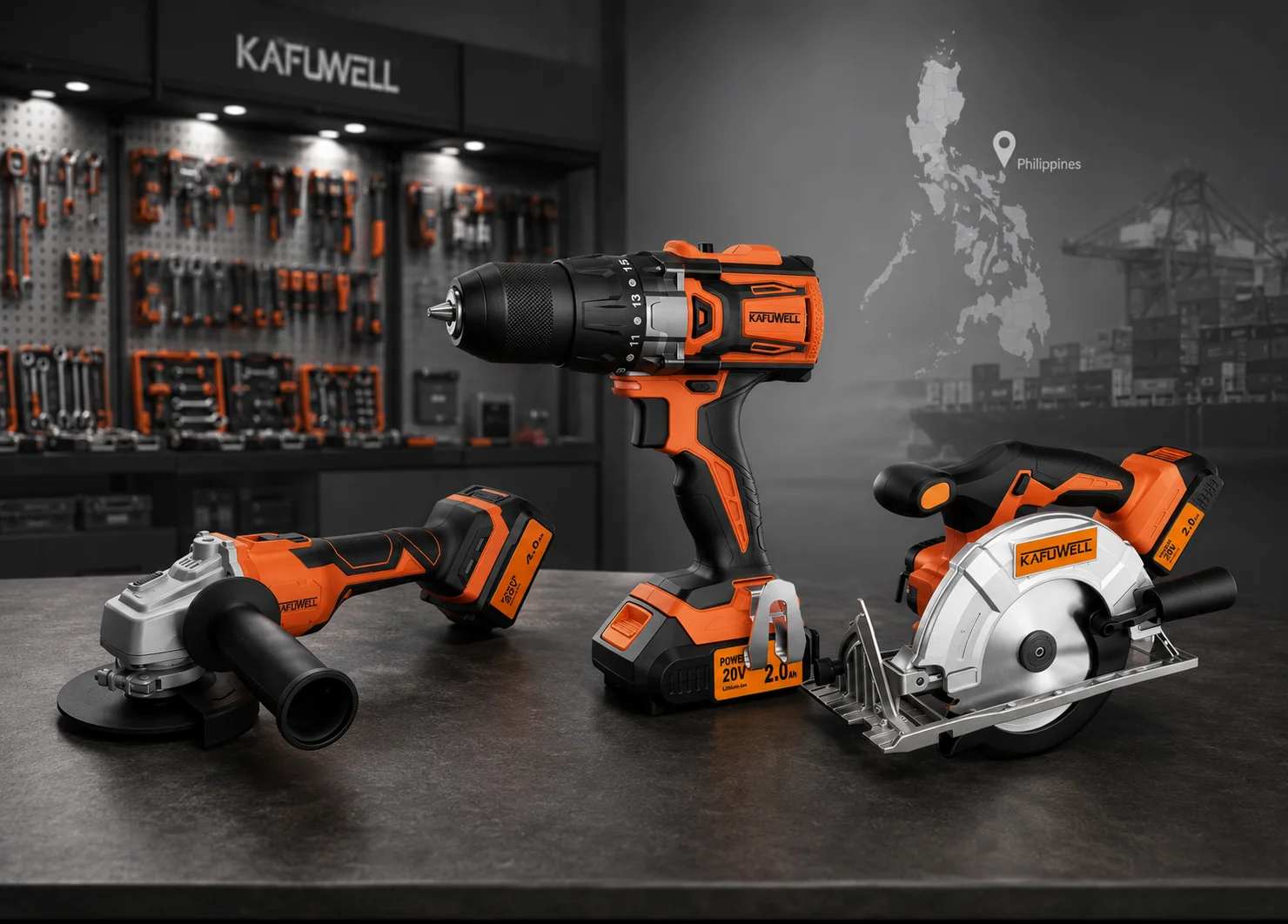
If you are planning a reliable brushless power tool solution, Kafuwell offers brushless drills, impact tools, and angle grinders designed for professional procurement. With support for specification customization, bulk supply, and long-term partnerships, these solutions help balance performance and cost for demanding applications.
FAQs
Are Brushless Power Tools More Durable Than Brushed Ones?
In most cases, yes. Brushless motors eliminate the brush and commutator wear points that limit lifespan in brushed motors, making them more stable for long-term, high-frequency use.
Do Brushed Motors Always Produce Sparks?
Small sparks at the brush-commutator contact are normal. Excessive sparking usually indicates worn brushes or poor contact and signals the need for inspection or maintenance.
Why Are Brushless Tools More Expensive? Is It the Motor or the Controller?
The higher cost mainly comes from the electronic control system and integration. Brushless tools replace mechanical commutation with electronic control, which increases development and manufacturing complexity.
Is a Brushless Drill Necessary for Home DIY Use?
If you frequently handle demanding tasks such as drilling hardwood, cabinet installation, or long fasteners, brushless performance and runtime can be worth it. For occasional tasks, brushed drills remain cost-effective.
Do Brushless Tools Extend Battery Life?
Often yes. Higher efficiency means less energy consumed per task and fewer charge cycles overall. Battery lifespan still depends on usage intensity, temperature, and charging habits.
How Often Do Brushes Need Replacement in Brushed Tools?
It depends on load and usage time. Heavy, continuous operation accelerates wear. Watch for symptoms such as power loss, increased sparking, unusual noise, or excessive heat.
Do Brushless Tools Perform Better at Low Battery Levels?
Many brushless tools maintain more consistent output as battery voltage drops due to active current control. However, both types must reduce power or shut down near battery protection limits.
Which Tool Should I Upgrade to Brushless First on the Same Battery Platform?
Start with the tool you use most or that works under the highest load. Impact drivers, drills, and angle grinders usually deliver the most noticeable benefits from a brushless upgrade.