Choosing the correct wrench size may seem simple, but in real work it often causes confusion. Many people assume that the nominal diameter of a bolt directly determines which wrench should be used.
In reality, however, a wrench fits the across-flats dimension of the bolt head or nut, and this dimension can vary depending on the fastener system and manufacturing standard.
That is why:
- The same M10 bolt may require different wrench sizes under different standards.
- Metric and SAE tools should not be assumed to be interchangeable by default.

What Does “Bolt Size” Mean?
When people say “bolt size,” they may be referring to three different things: the thread diameter, the head size, or the wrench size. These are related, but they are not the same. The nominal bolt diameter describes the threaded shank, while the wrench size corresponds to the head or nut width across the flats. In other words, an M12 bolt does not mean you need a 12 mm wrench; it means the threaded portion is 12 mm in diameter. The wrench size depends on the head dimensions assigned to that fastener standard.
This distinction matters because standard hex bolts, heavy-hex bolts, and fasteners made to different national standards can use different head dimensions. Portland Bolt notes that wrench openings and socket sizes are based on the across-flats dimension, while Bolt Depot’s charts show that the same nominal metric diameter can map to different wrench sizes under ANSI/ISO, DIN, and JIS systems.
Bolt Diameter vs Head Size vs Wrench Size
A simple way to understand the difference is this:
- Bolt diameter = the diameter of the threaded shank
- Head size = the width across the flats of the bolt head
- Wrench size = the tool opening or socket size that fits that across-flats dimension
Because the tool matches the head or nut rather than the thread, measuring only the bolt diameter is not enough if you want to choose the correct wrench.
Why the Same Bolt Diameter May Use Different Wrench Sizes
A common source of confusion is that different standards use different head dimensions. For example, Bolt Depot’s metric chart shows that an M10 fastener may use a 16 mm head under ANSI/ISO, 17 mm under DIN, and 14 mm under JIS. Heavy-hex fasteners can be larger still. Likewise, Portland Bolt notes that heavy hex nuts are 1/8 inch larger across the flats than standard hex nuts of the same nominal size, so they require a larger wrench or socket.
How to Identify the Correct Wrench Size for a Bolt
The easiest and safest approach is to identify the fastener system first, then match the tool to the head size. If the fastener is standard hex, the chart below will usually get you very close. If it is a flange bolt, heavy-hex fastener, or special head design, you should verify the specific standard before applying torque.
Step 1: Identify Whether the Fastener Is Metric or SAE
Look at the equipment origin, existing tool system, or stamped fastener markings. Automotive, machinery, and industrial products often stay consistent within one measurement system, but mixed-tool environments are common. Never force a “close enough” wrench onto a fastener just because it almost fits. Metric and SAE sizes may feel similar, but they are not designed as direct substitutes.
Step 2: Measure the Across-Flats Dimension
If you are unsure, use a caliper to measure the width across the two flat sides of the bolt head or nut. That measurement is what determines the correct wrench or socket opening. Portland Bolt specifically states that socket sizes and wrench openings are determined by the dimension across the flats of the nut or bolt head.
Step 3: Confirm the Head Style
Before choosing a tool, confirm whether the fastener is a standard hex, heavy hex, lag bolt, or another style. Bolt Depot’s US chart separates standard hex bolts from heavy-hex bolts, and Portland Bolt notes that heavy-hex hardware requires a larger tool opening because the across-flats dimension is larger.
Metric Bolt Size and Matching Wrench Size Chart
The chart below covers common standard metric hex bolts. These values are useful for general workshop reference, but you should still verify the applicable standard when accuracy matters. As Bolt Depot’s data shows, some metric sizes differ between ANSI/ISO, DIN, and JIS.
| Bolt Diameter | Common Head / Wrench Size (ANSI/ISO) | Notes |
| M4 | 7 mm | Common small machine fastener |
| M5 | 8 mm | Common for light assembly |
| M6 | 10 mm | Very common in household and equipment repairs |
| M8 | 13 mm | Common in brackets and mechanical assemblies |
| M10 | 16 mm | DIN may use 17 mm; JIS may use 14 mm |
| M12 | 18 mm | DIN may use 19 mm; JIS may use 17 mm |
| M14 | 21 mm | DIN may use 22 mm; JIS may use 19 mm |
| M16 | 24 mm | JIS may use 22 mm; heavy hex is larger |
| M20 | 30 mm | Heavy-hex versions are larger |
These values are drawn from Bolt Depot’s metric bolt head/wrench chart, which also shows the standard differences that cause many fitment mistakes in the field. For example, M8 is listed as 13 mm in ANSI/ISO and DIN but 12 mm in JIS, while M12 appears as 18 mm in ANSI/ISO, 19 mm in DIN, and 17 mm in JIS.
SAE / Imperial Bolt Size and Matching Wrench Size Chart
For common US standard hex bolts, the wrench sizes below are widely used reference points. Bolt Depot’s US chart shows the standard head-and-wrench sizes for hex bolts and also lists larger dimensions for heavy-hex bolts.
| Bolt Diameter | Standard Hex Bolt Wrench Size | Heavy Hex Size |
| #6 | 1/4 in. | — |
| #8 | 1/4 in. | — |
| #10 | 5/16 in. | — |
| #12 | 5/16 in. | — |
| 1/4 in. | 7/16 in. or 3/8 in. | — |
| 5/16 in. | 1/2 in. | — |
| 3/8 in. | 9/16 in. | — |
| 7/16 in. | 5/8 in. | — |
| 1/2 in. | 3/4 in. | 7/8 in. |
| 5/8 in. | 15/16 in. | 1-1/16 in. |
| 3/4 in. | 1-1/8 in. | 1-1/4 in. |
This chart is especially useful for automotive repair, equipment maintenance, and general fastening work in US-standard systems. It also highlights why heavy-hex hardware needs extra attention. A 1/2-inch standard hex bolt commonly uses a 3/4-inch wrench, while a 1/2-inch heavy-hex bolt uses a 7/8-inch wrench.
Why These Charts Matter in Real Work
The biggest benefit of a bolt-to-wrench chart is speed and accuracy. Instead of trying several tools until one feels close, you can identify the fastener system, check the nominal bolt diameter, and move directly to the correct wrench or socket size. That reduces rounded corners, tool slippage, and unnecessary damage to both the fastener and the tool.
It also helps when choosing a socket set or wrench kit. KAFUWELL’s socket page shows metric socket sets, imperial socket sets, wrench-and-socket sets, and 1/4-inch drive options, which fit well with the mixed metric/SAE use cases covered in this guide.
Metric vs SAE Wrench Sizes: Common Conversion Confusion
One of the most common mistakes in fastening work is assuming that a metric wrench and an SAE wrench are “close enough.” In practice, a near fit is often the fastest way to round off a bolt head or nut. Even when two sizes seem very similar, they are not designed as direct substitutes. The correct approach is to identify the fastener system first, then use the matching wrench or socket size from a reliable chart. Portland Bolt emphasizes that wrench and socket selection should be based on the across-flats dimension of the nut or bolt head, while Bolt Depot’s charts separate metric and US sizes for exactly this reason.
Why 13 mm Is Not the Same as 1/2 Inch
A 13 mm wrench may feel close to 1/2 inch, but “close” is not the same as “correct.” Small differences in fit become a big problem when torque increases, especially on corroded, painted, or high-load fasteners. If the tool has play, it can slip under force and damage the corners of the head. That is why mechanics and technicians usually keep both metric and SAE tool sets available rather than mixing sizes. Bolt Depot’s separate metric and US head-size charts reinforce that these systems should be treated independently, not as interchangeable by habit.
Why the Wrong Wrench Size Damages Fasteners
When the wrench opening is too loose, the contact points shift toward the corners of the fastener instead of sitting tightly on the flats. That reduces grip and increases the chance of rounding. Using the exact tool size improves contact, helps transmit torque more evenly, and lowers the risk of damaging both the fastener and the tool. Since wrench sizing is based on the width across flats, using the correct match is especially important for stubborn or high-torque jobs.
Socket vs Wrench: Which Tool Should You Use?
In many jobs, the next decision is not just what size, but also what type of tool. Both sockets and wrenches can tighten common hex fasteners, but they do not perform the same way in every situation. Sockets usually provide better engagement and are preferred when higher torque, better grip, or faster repetitive fastening is needed. Wrenches are useful when access is limited and there is no room for a ratchet head or extension.
Use a Socket When
A socket is usually the better choice when you need stronger engagement on the fastener, especially in automotive repair, machinery maintenance, and repetitive assembly work. KAFUWELL’s socket range includes metric socket sets, wrench-and-socket combinations, and multi-piece sets with extension bars, ratchet handles, and hex keys, which are well suited for this kind of work. Their 46-piece 1/4-inch metric socket set includes 4–14 mm sockets, specialty bits, extensions, and a 72-tooth ratchet, while larger kits include both 1/4-inch and 1/2-inch drive systems for broader coverage.
Use a Wrench When
A wrench is often more practical when the fastener is exposed from the side, when there is limited overhead clearance, or when quick repositioning matters more than maximum torque. Open-end and combination wrenches are especially useful for installation, maintenance, and adjustment work where a socket cannot fully seat over the fastener. In real workshops, many users keep both sockets and wrenches on hand because each tool solves a different access problem.
Read more: Different Types of Socket Sets and Their Uses
Common Mistakes When Matching Bolt Sizes and Wrench Sizes
Many fitment errors happen because users focus only on the bolt diameter and ignore the fastener standard, head style, or measurement system. The result is usually a poor fit, stripped corners, or wasted time switching between tools. Portland Bolt and Bolt Depot both make clear that accurate wrench selection depends on the actual head or nut dimensions, not just the nominal thread size.
Here are some of the most common mistakes:
- Confusing bolt diameter with wrench size
- Mixing metric and SAE tools on the same fastener
- Ignoring heavy-hex or non-standard head dimensions
- Assuming one chart applies to every standard worldwide
- Using an adjustable wrench where a correctly sized socket or wrench is available
These mistakes are easy to avoid if you identify the fastener system first, then verify the across-flats dimension before applying torque.
Recommended Tool Sets for Common Fastener Work
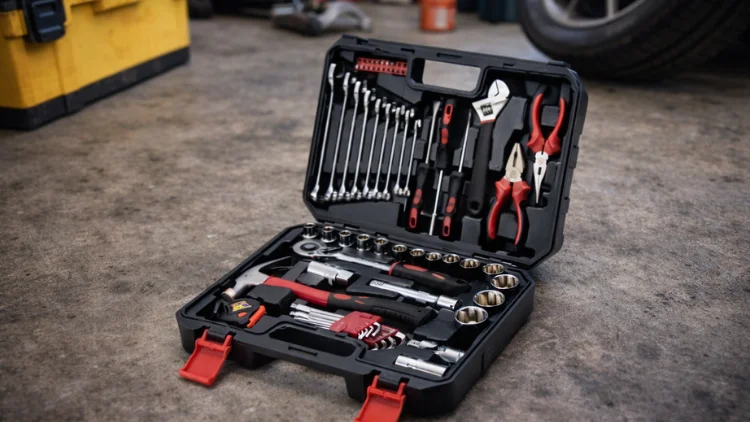
The right chart is only part of the solution. The other part is having a tool set that actually covers the fastener sizes you encounter most often. For light repair, bicycles, appliances, and small machinery, a compact metric socket set is usually enough. KAFUWELL’s 25-piece and 46-piece 1/4-inch metric socket sets are designed for this kind of work, with small sockets, ratchets, extension bars, and accessories for precision fastening.
For automotive repair and mixed workshop use, a broader kit is usually a better choice. KAFUWELL’s larger socket and wrench sets include both 1/4-inch and 1/2-inch drive systems, multiple socket sizes, spark plug sockets, universal joints, and combination wrenches, making them better suited for jobs where both metric and standard fasteners may appear.
FAQ
What Wrench Size Fits an M10 Bolt?
For common standard metric hex bolts, an M10 fastener commonly uses a 16 mm wrench in ANSI/ISO, 17 mm in DIN, and 14 mm in JIS. Because the answer depends on the fastener standard, it is safest to verify the head size rather than assuming one value applies everywhere.
What Wrench Size Fits an M12 Bolt?
For standard metric hex bolts, an M12 fastener commonly uses an 18 mm wrench in ANSI/ISO, 19 mm in DIN, and 17 mm in JIS. Heavy-hex versions are larger, so the fastener type matters as much as the nominal diameter.
What Wrench Size Fits a 3/8-Inch Bolt?
For a standard US hex bolt, a 3/8-inch bolt commonly uses a 9/16-inch wrench. If the fastener is a different head style or a heavy-hex version, the required tool size can change.
Is a 13 Mm Wrench the Same as a 1/2-Inch Wrench?
No. They are close in feel, but they are not the same size and should not be treated as direct substitutes. Mixing near-equivalent sizes increases the risk of slipping and rounding off the fastener. Metric and SAE charts should be used separately.
Do Bolt Diameter and Wrench Size Always Match?
No. The wrench size is based on the across-flats measurement of the bolt head or nut, not the nominal thread diameter. The same bolt diameter can use different wrench sizes depending on whether the fastener follows ANSI/ISO, DIN, JIS, or heavy-hex dimensions.
Conclusion
The correct wrench or socket size is determined by the head or nut dimensions, not simply by the bolt’s nominal diameter. To avoid damaged fasteners and wasted time, always identify whether the hardware is metric or SAE, then match the tool to the correct across-flats size and fastener standard.Explore KAFUWELLsocket sets and wrench tools to find the right fastening solution for your next repair, assembly, or maintenance job.