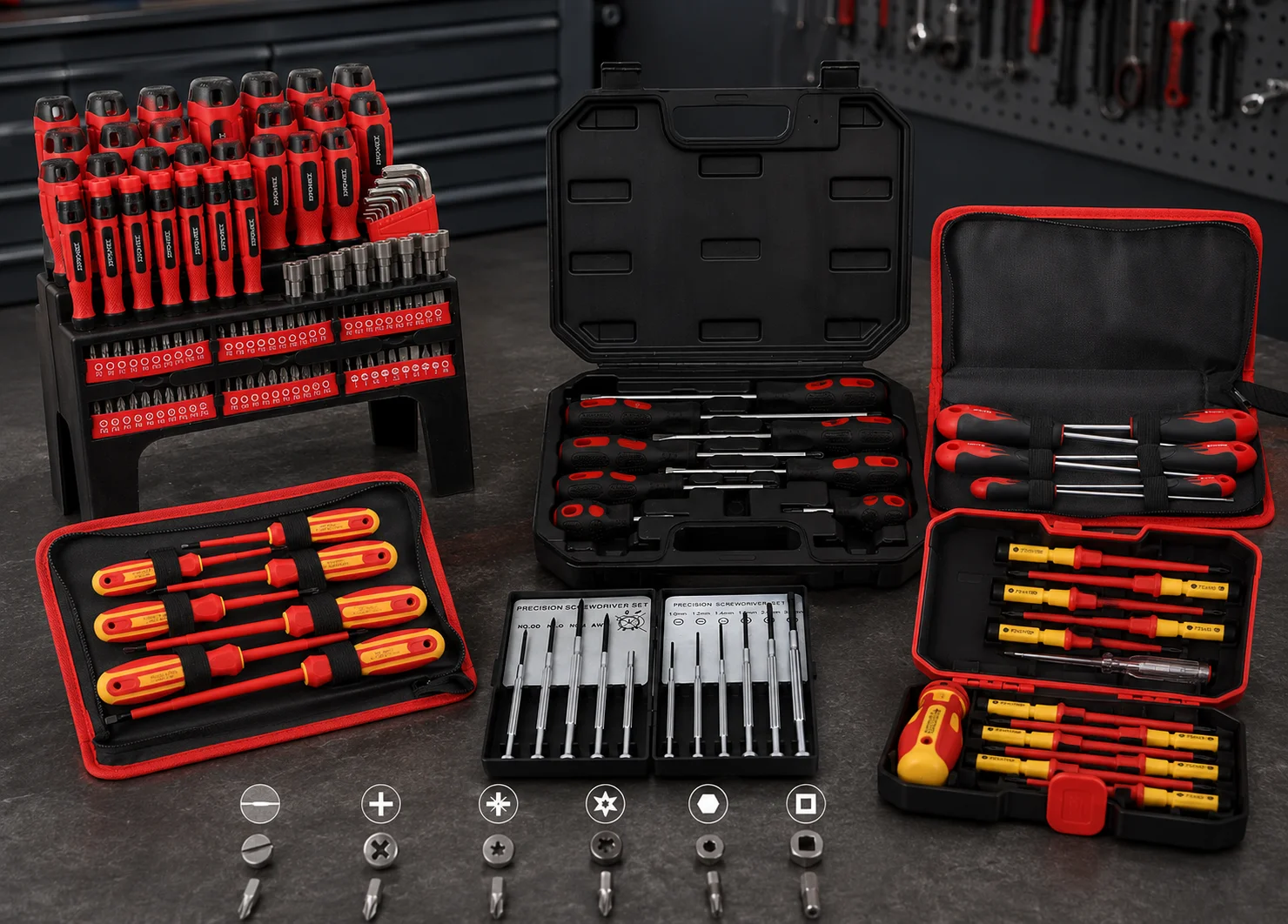
Distributors choose the right power tool assortment by first building a small set of market-proven “core tools,” and then expanding only through compatible platforms and repeatable purchasing demand.
The right assortment is not the one with the most SKUs, but the one that covers most purchasing scenarios with clear segmentation.
This guide explains how wholesalers decide which power tools should be included in an assortment, and how common assortment mistakes can be avoided.

What Does “The Right Assortment” Mean in Wholesale Power Tools?
In a distribution system, an assortment is essentially a sales system. It must match how retailers and contractors actually purchase tools.
A “right” power tool assortment needs to achieve three things.
First, it should cover common jobsite or usage scenarios.
Second, it should clearly separate different buyer tiers.
Third, it should be built on a stable platform that supports repeat purchases.
If an assortment cannot be explained to retailers in a simple and clear way, it is usually already too complex.
Step One: Define the Primary Buyer Groups Before Choosing Tools
Distributors choose tools based on who pays for them, not on whether the lineup looks “complete.”
In most wholesale channels, customer types are highly predictable.
DIY and home users focus more on price and basic functionality.
Professional contractors care more about durability and continuous working capability.
Hardware retailers need fast-moving best sellers.
Engineering and construction companies prioritize reliability and long-term supply stability.
Once these buyer groups are clearly defined, tool selection becomes much easier, because every tool must clearly answer two questions: who it is for, and where it sits in the price structure.
Step Two: Build the Assortment Around Core Power Tools
Most distributors start with similar core tools because demand for these tools is stable across regions.
Core tools are the products that generate the highest repeat purchases and cross-selling opportunities.
A typical core set usually includes a drill, an impact tool, and a cutting or grinding tool.
This structure covers drilling, fastening, and material handling on jobsites, which represent the most common use cases for distributors.
Step Three: Choose One Main Cordless Platform and Stay Consistent
Distributors do not only sell tools. They sell a battery platform.
Choosing the main cordless platform is one of the most critical assortment decisions, because it affects future product expansion, accessory systems, and after-sales support.
If the platform changes frequently, distributors are forced to stock incompatible batteries and chargers, increasing friction and slowing repeat orders.
Most distributors maintain one core platform for the main market, and only add a lower-end or supplementary platform after demand has been clearly validated.
Step Four: Make the Difference Between Entry-Level and Professional Lines Obvious
An assortment fails when buyers cannot clearly see the difference between product tiers.
A clear assortment makes entry-level and professional products easy to distinguish and easy to explain, both visually and in terms of selling points.
Differences may appear in motor type, duty cycle, structural materials, or battery configuration.
When two models are too similar, distributors often face buyer hesitation, slower sales, and higher return rates.
Step Five: Add Supporting Tools Only When Demand Is Repeatable
After the core tools are established, distributors should expand the assortment based on real, repeat customer orders.
Proper supporting tools usually share the same battery platform and serve clear use scenarios such as installation, repair, or jobsite finishing.
Tools that are purchased only once, or serve very narrow niches, are generally not suitable for the main assortment.
Step Six: Use Kits to Make the Assortment Clearer
Kits help distributors sell complete solutions without adding too many SKUs.
An effective kit usually corresponds to a real purchasing scenario, such as a starter kit for new customers or a two-tool combo for retail channels.
Kits also help standardize battery and charger configurations, strengthening platform consistency.
Recommended Assortment Structure
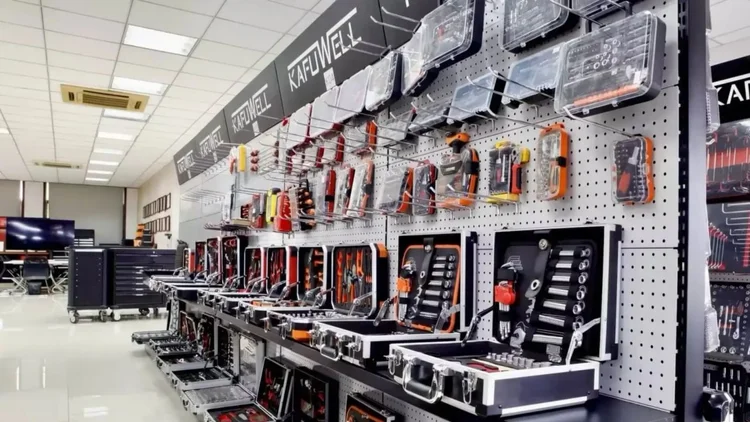
Distributors usually start with a simple and repeatable structure: one entry-level platform for price-sensitive demand, and one main platform for professional demand.
A clear 12V entry line + 20V main line makes the assortment easier to explain, easier to reorder, and easier to scale.
12V Entry-Level Assortment Example
The 12V line is mainly designed for customers who value compact size, affordable pricing, and light-to-medium duty use. It works well for retail channels and DIY users.
This line should remain streamlined and focused, and should not compete with the 20V main line.
A practical 12V assortment usually includes:
- 12V Cordless Drill
- 12V Cordless Impact Driver
- 12V Multi-Tool or Compact Electric Screwdriver
- 12V Battery Options: 2.0Ah as the base version, 4.0Ah as the upgrade
- 12V Charger: one standardized charger for the entire line
A kit strategy improves sell-through for the 12V line. A starter kit that includes a drill, one battery, and one charger is usually easier to sell than tool-only products.
20V Main-Line Assortment Example
The 20V line is the core revenue driver of the entire assortment. It primarily targets contractors, maintenance teams, and jobsite users. This line should have clear professional positioning and generate stable repeat purchases.
A practical 20V assortment usually includes:
- 20V Cordless Drill
- 20V Cordless Impact Driver
- 20V Impact Wrench (very popular in automotive and installation scenarios)
- 20V Angle Grinder
- 20V Circular Saw or Reciprocating Saw
- 20V Work Light
- 20V Battery Options: 2.0Ah for entry level, 4.0Ah as standard, 6.0Ah or higher for heavy-duty use
- 20V Charger Options: one standard charger plus one fast charger for higher-end users
This set covers the most common jobsite scenarios such as drilling, fastening, cutting, and grinding, while also creating natural upsell opportunities for battery upgrades and combo kits.
Common Mistakes to Avoid When Expanding the Assortment
Most assortment problems come from expanding too early or creating product overlap.
Distributors typically avoid the following situations:
- Introducing niche tools before the core line is stable
- Selling multiple incompatible battery systems at the same time
- Listing many drills with only minor specification differences
- Mixing 12V and 20V products within the same buyer tier
If a new tool does not clearly improve scenario coverage or repeat purchasing, it usually does not belong in the main assortment.
Conclusion
Distributors should choose a power tool assortment based on a clear platform structure: use the 12V entry line to drive volume, and the 20V main line to serve professional demand.
When tool configurations are clear, battery platforms are stable, and kit structures are unified, the assortment becomes easier to sell, easier to reorder, and easier to scale.If you are interested in becoming a power tool distributor, you can apply on the Partner with KAFUWELL page to join KAFUWELL’s power tool distribution network. We offer competitive terms and comprehensive support for our partners.